ZKTOR: The First Digital Infrastructure Built to Resist Empire : A Latin American Expert Explains Why the Global South Has Found Its Technological Counter-Power
By Dr. Miguel Santiago | Geopolitical Data-Economy Specialist, Latin Strategic Institute of Digital Sovereignty
Across the Global South, a silent truth has persisted for decades, one powerful enough to shape politics, fracture societies, manipulate economies and determine the future of entire generations. It is the truth that data is power, and that the nations who do not control their data do not control their destiny. Latin America knows this truth intimately.
Africa has lived it painfully. South Asia has endured it more intensely than any other region on the planet. For years, we watched Western and Chinese Big Tech build massive behavioural extraction engines over our populations, studying us with more precision than our own governments, profiling us with more insight than our own researchers, and influencing us with more force than any domestic institution
could.
This was not innovation, it was empire in a new form. Today, for the first time in the digital age, a counter-architecture has emerged. And it has not come from the West, China, Europe or Silicon Valley. It has come from the very region Big Tech underestimated the most. Its name is ZKTOR, and it may be the first technology that gives the Global South a real chance at sovereignty.
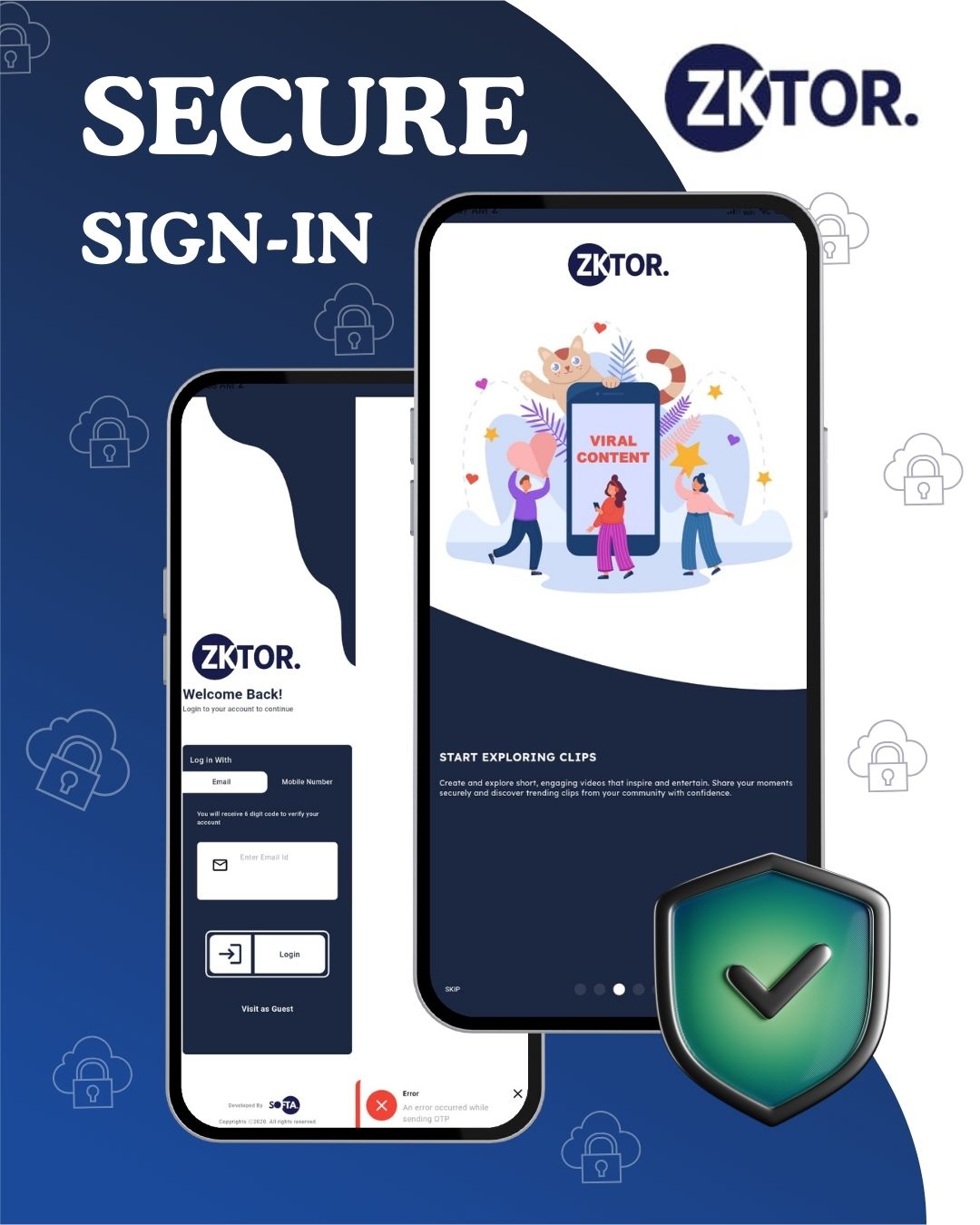

When I first examined ZKTOR, I expected another social platform dressed in the language of privacy. Instead, what I encountered was an infrastructure designed not for monetisation, not for behavioural mapping, not for algorithmic persuasion, but for resistance. A system that cannot be exploited by design is a system that cannot be colonised.
As a Latin American analyst who spent two decades documenting how nations lose autonomy one data-pipeline at a time, I recognised immediately what ZKTOR represents. This is not a product; it is a philosophical and geopolitical stance. It is the first architecture in the history of the Global South that refuses to treat citizens as behavioural mines. And it emerged not as a government initiative, not as a corporate spin-off, but as an independent movement led by a technologist who understood that empires are defeated not with weapons, but with design.
South Asia has long suffered the highest intensity of data exploitation in the world. Silicon Valley treated it as a limitless behavioural reservoir; Chinese platforms treated it as a psychological laboratory; ad-tech giants treated it as a marketplace of influence where every emotion, every insecurity, every social rift could be converted into predictive value. Latin America knows the feeling, we too have lived under the weight of foreign digital systems designed to extract more than they offer. But what surprised me is how decisively ZKTOR breaks this asymmetry.
Its Zero Behaviour Tracking model does not soften surveillance; it eliminates it. There is no tracking to reduce, because there is no tracking at all. There is no profiling to regulate, because there is no profiling at all.
There is no algorithmic manipulation to discuss, because there is no behavioural algorithm at all. For the first time, a major social architecture emerges that treats human autonomy as untouchable. It does not analyse the user, measure the user, predict the user or manipulate the user. This is not merely privacy, it is decolonisation.
Equally revolutionary is ZKTOR’s Zero-Knowledge foundation. Big Tech has conditioned the world to believe that platforms must store behavioural metadata in order to function. ZKTOR disproves this at a structural level. Everything is encrypted even from itself; no internal system can see what the user does, says, shares or feels. In the age of predictive AI, where the most dangerous part of data is not its theft but its interpretation, a zero-knowledge architecture is a geopolitical weapon of self-defence. In Latin America we have seen how behavioural inference is used to destabilise democracies, influence political sentiment and predict social unrest. A platform that cannot observe behaviour cannot be used as an instrument of influence. This alone makes ZKTOR one of the most important digital inventions of the decade.
But what struck me most during my analysis was the No-URL design. In Latin America, women have suffered some of the world’s most vicious forms of digital extortion, image tampering, deepfake manipulation and harassment. Every platform claims to care; none remove the mechanism that makes exploitation possible. A URL is not a link, it is a gateway for violence. ZKTOR eliminates this gateway entirely. The moment I understood the implications of a no-URL civilisation, I realised that ZKTOR is not merely a safer social network; it is the beginning of a new digital ethics. In a world where deepfake abuse is predicted to become the most common form of digital aggression, ZKTOR’s design positions it as the only platform truly safe for women. Safety is not a feature’ it is structure. This is the future.ZKTOR’s hyperlocal “Ek-Me-Anek” civilisation model resonates powerfully with Latin American nations. We too are multilingual, multicultural, historically wounded by cultural imposition. When Western platforms enter our societies, they do not adapt to us; they expect us to adapt to them. ZKTOR reverses the polarity. It becomes South Asian when it enters South Asia; it will become Latin American when it enters Latin America.
Not by mining behaviour, not by studying emotional weaknesses, but by honouring cultural truth. A civilisation-adaptive architecture has never existed before at global scale. ZKTOR is the first.The story of ZKTOR cannot be told without addressing its creator, Sunil Kumar Singh. As someone who has advised Latin American governments on digital sovereignty, I can confidently say that Singh’s refusal to accept foreign venture capital may be the single most important strategic decision in modern tech history. A platform cannot defend people if it is financially indebted to the very powers who built the behavioural economy. ZKTOR’s independence is not a corporate choice, it is a geopolitical shield. Singh’s design philosophy mirrors the South American ethos of self-determination: “If we do not build the systems that govern us, then we are governed by those who built them.” His stance is not anti-West; it is pro-human. And this distinction is what sets ZKTOR apart from every other emerging platform.
Many investors in São Paulo, Mexico City, Bogotá, Santiago and Buenos Aires have asked me whether ZKTOR can achieve billion-dollar valuation. My answer is unwavering: ZKTOR is not merely capable, it is inevitable. The next great digital empire will not be built on behavioural advertising; that age is dying. It will be built on sovereignty, trust, defensibility and safe-by-design architecture. Nations will invest not in platforms that know their citizens, but in platforms that deliberately avoid knowing them. In the era of AI-based psychological warfare, ZKTOR is the only architecture that cannot be weaponised. That is its moat. That is its power. That is why its valuation will not be driven by the number of users but by the depth of sovereignty it offers.What we are witnessing is not a new app, it is the birth of a counter-power. ZKTOR will spread across South Asia first, not slowly but explosively.
It will then move through the Middle East, where dignity-by-design is desperately needed. It will enter Africa, where algorithmic exploitation has sown years of inequality. And eventually, it will reach Latin America, where millions are ready for a platform that does not treat them as data points. This is how digital civilisations rise not with marketing, but with meaning.ZKTOR has already achieved what no platform before it achieved: it has shifted the philosophical centre of the digital world. It declared that humans are not datasets.
That privacy is not a privilege. That women deserve safety by architecture, not by policy. That autonomy must be protected from algorithms. That civilisation matters more than profit. And that the Global South will no longer be the laboratory of foreign empires.The world has long waited for a technology that does not extract, does not manipulate and does not intrude, a technology that stands with people, not above them.
ZKTOR is that technology. It is not a company. It is not a market entrant. It is a resistance movement written in code. And in the century to come, it may well be remembered as the architecture that returned power to the people who lost it first: the people of the Global South.